


Last call for the landline. The wired communication world will soon be no more
Remember party lines? Switchboards? Yellow Pages? The traditional telephone is almost gone, but its cultural impact deserves a ringing endorsement
Article content
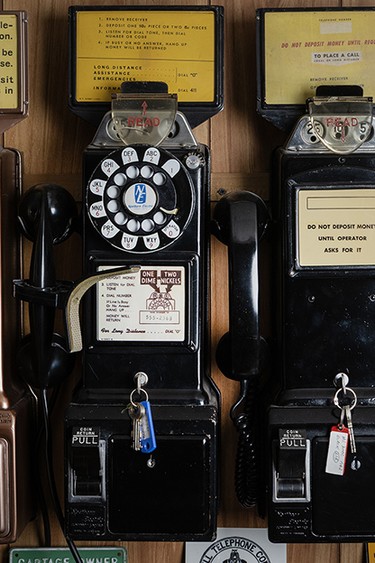
It’s an ordinary, old black pay phone, its push buttons faded by decades of fingers pressing the numbers.
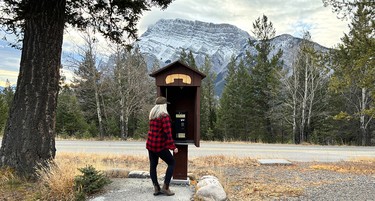
But I like to call it the world’s most beautiful pay phone, thanks to its front-row view of the majestic, 300-million-year-old Mount Rundle. I first stumbled across this juxtaposition of 20th-century technology and timeless nature a few years ago at a campground just outside of Banff, Alta. Sadly, when you lift the telephone receiver now, there’s no dial tone — just dead air.

tap here to see other videos from our team.
Last call for the landline. The wired communication world will soon be no more Back to video
tap here to see other videos from our team.

Whenever I see an old, decommissioned pay phone or, even more rarely, a rotary dial phone, I’m transported to a time when the landline telephone played a major role in all our lives. I was an early adopter. So enamoured with this marvel of communication was I that for my third birthday, I asked for and received a toy version of our family’s rotary dial phone. Later, I gladly risked a tongue-lashing for the opportunity to listen in on other people’s conversations on my grandparents’ party line, their ancient wooden wall telephone a portal to the daily gossip in their rural Manitoba community.

After my dad had a teen line installed in our basement rec room, I’d jabber endlessly with my best friend, who lived right across the street. During this golden era of telephone anonymity, we also made prank calls across the city, recording our shenanigans on a cassette player, a gift from my eldest brother. We got so good at it, my friend’s parents played those recordings at adult-only house parties.
(One of our biggest hits was a series of calls to downtown Winnipeg hotels on the eve of the Shrine Circus, posing as Hungarian lion tamers needing a place to stay with our “pets.”)
After high school, my entanglement with the telephone continued. As an Alberta-wide directory assistance operator, I was on the phone about 30 hours a week, reading out telephone numbers from my cubicle in a windowless downtown office space, a setting straight out of the Apple TV series Severance. In its early days, we “telephone girls” (a term coined in the late 19th century for the mostly female profession) would look up the numbers in phone books at our stations, but soon small computer terminals replaced paper. After my shift, which involved talking to several hundred people at about 27 seconds per call (yes, we were timed), I’d sometimes join my friends at Slack Alice, a restaurant a few blocks away. The short-lived Calgary hangout’s calling card was a landline phone at each table where you rang up your fellow diners, a kind of analog version of today’s dating apps.